
Private desert camps, riads with the door shut behind you, and a trip built around the two of you.
The first night in the dunes is the one people remember. You reach camp in the late afternoon, the light goes orange and then pink, and after dinner someone picks up a drum by the fire. Later everyone drifts off to bed and it goes quiet. Not hotel-at-2am quiet. Quiet like there is nothing out there for a hundred kilometres, because there isn’t.
That part is hard to put in a brochure, and it is the reason we keep doing this.
We’re Morocco Stunning Tours, run by our family out of Fes and the desert near Rissani, where we’re from. We’ve been arranging private trips for a bit over ten years, and honeymoons have turned into a big part of the work. Probably because they’re the trips where people actually tell us what they want, rather than asking what the standard package includes.
What Morocco does well for a honeymoon is contrast. In one week you can go from a souk where you can’t hear yourself think to somewhere with no sound at all; from a courtyard with a fountain to a mountain pass at 2,200 metres. You don’t get that at a resort. You also don’t get it if you rush, which is the one thing we’ll push back on when we plan your route.
The short answer is that you get several different holidays inside one trip, with no flights between them. Medina, mountains, desert, coast — nothing is more than a day’s drive apart. These are the things couples mention afterwards.
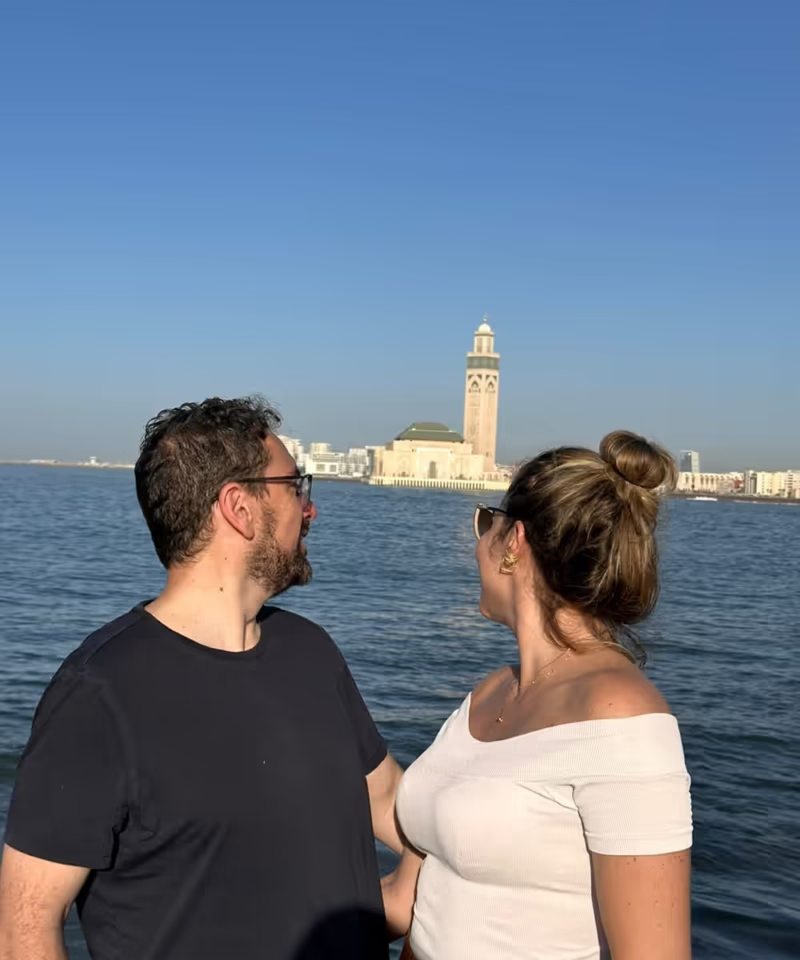
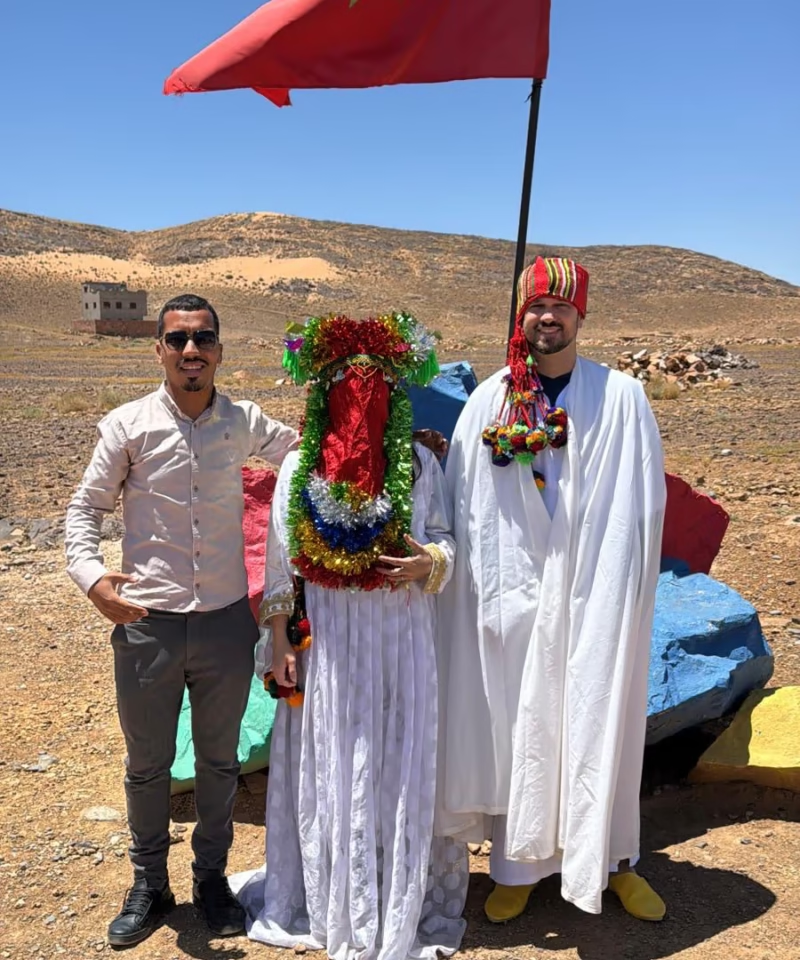
Marrakech → Atlas → Ait Benhaddou → Sahara → Fes. Two nights in Marrakech first, mostly to get over the flight, with a guided walk and a cooking afternoon. Then over the Tizi n’Tichka pass, a stop at Ait Benhaddou and a night in the dunes. You finish with two nights in Fes, which is older and quieter than Marrakech and, if you ask us, the better city. It is a full week, but it should never feel like a race.
Marrakech → Atlas → Sahara → Fes → Chefchaouen → Essaouira. The same spine as the seven-day trip, plus the blue streets of Chefchaouen and two slow days on the Atlantic at the end. This is the one we suggest most often, because those last two days by the sea are when people finally stop checking their phones. Two spa stops and a couple of private dinners are built in.
Marrakech → Sahara → Marrakech or Fes. If Morocco is a few days added onto a honeymoon somewhere else, this is the version that still gets you into the dunes. There are long driving days and no way around that. Most couples decide the night in the sand earns them.
A riad is a house that faces inwards. A plain door on a noisy lane, and behind it a courtyard with a fountain, orange trees, tilework and a terrace on the roof. The noise simply stops. Most have six to ten rooms, so staff learn your names on the first evening and are making your coffee the way you like it by the second. One thing to know: cars cannot reach most riad doors. You are met at the nearest gate and a man with a cart takes your bags the last few hundred metres. It sounds like a hassle. It is actually a lovely way to arrive.
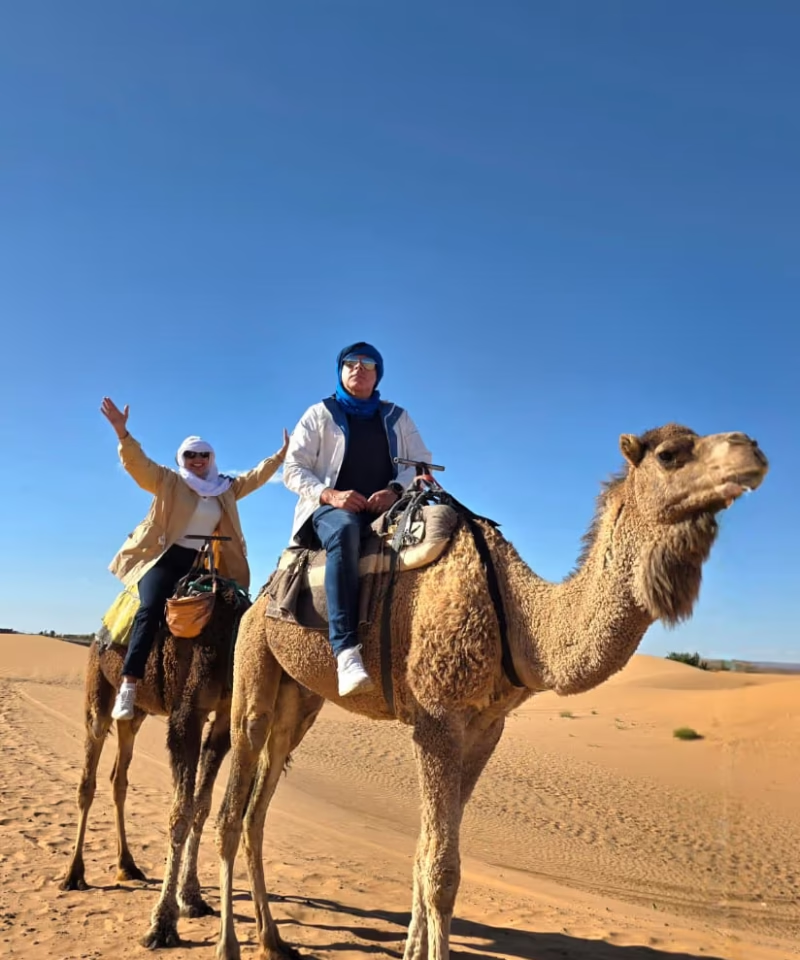
This is the centre of most honeymoons we plan. Our camp sits in the Erg Chebbi dunes near Merzouga, and the honeymoon tents are proper rooms rather than canvas over a mattress: bed, rugs, lanterns, ensuite bathroom, hot water. You come in by camel around sunset, dinner is served outside, and the fire and the drums last as long as you want them to. After that nobody will bother you. Bring something warm — the temperature drops fast once the sun is down, in every season.
On the road between the mountains and the desert, the best places to stay are old kasbahs that have been restored: thick earth walls, palm gardens, a pool looking down the valley. They break up a long driving day, and they photograph beautifully, which makes sense given how many film crews have worked in this region. A night around Skoura or the Dades is what we usually suggest if you would rather not do Marrakech to the dunes in one push.
If you finish on the Atlantic, Essaouira has small whitewashed guesthouses inside the ramparts where you can hear the sea from bed. Up in the High Atlas there are a few small lodges above Berber villages with nothing below them but terraces and walnut trees. Either makes a good last stop. After the medinas and the desert, most couples want two days of doing very little somewhere beautiful.
We quote every trip from scratch, because the number depends on when you come, where you sleep and how far you travel. There is no package price to put on a page, which is inconvenient for a website and better for you. Most honeymoons land in one of three brackets.
Comfortable. Riads with real character, a standard desert camp, private car and driver throughout. Everything is private. The romance is in the places, not the thread count.
Boutique. What most couples choose. The best room in small design riads, an ensuite honeymoon tent at the luxury camp, a hammam, a few private dinners, and a local guide in each city on top of your driver.
Luxury. Palace riads and five-star kasbahs, the top camp, the balloon, private chefs, a spa wherever you want one, and enough room in the budget to change the plan on the day without thinking about it.
Always included: the car, the fuel, your driver-guide, rooms and breakfasts, and all the rebooking we quietly do when something changes. Not included: flights, most lunches and dinners, entry tickets and tips. You get the full picture in writing before you pay anything. And we do not take you to carpet shops for commission — worth saying, because it is a genuine problem here, and it is how a lot of couples end up writing to us in the first place.
October, November, March, April and May are the best months, and if you have a choice we would pick one of them. Here is how the rest of the year actually feels on the ground.
Yes, and it is one of the better parts of this job. Petals, champagne, a table set somewhere you are not expecting, a cake, a proposal. Tell us in advance so we can get things to the right place — especially out in the desert, where nothing is five minutes away.
We think so, but we are hardly neutral. What we would say is that it is romantic in a different way to a beach holiday: courtyards, rooftops, firelight and silence rather than cocktails by a pool. If that sounds like you, you will love it.
Yes. Morocco is one of the safest countries in the region for visitors and crime against tourists is rare. Travelling with a private driver-guide also removes most of the everyday friction — the hustle, the navigation, the haggling — which is what actually wears couples down.
Seven to ten days. Seven covers Marrakech, the desert and Fes. Ten adds Chefchaouen and the coast and lets you slow down. Under five days we would rather show you one city and the desert properly than four places through a car window.
Never. Private means private: your car, your guide, your schedule.
For spring and autumn, three to six months, because the good honeymoon rooms and tents are limited and they go first. We have put together lovely trips at four weeks’ notice — you simply have less to choose from.
Plenty of couples do. Essaouira is the usual pairing, walkable and relaxed, though the Atlantic there is cold and windy — a beach for walking rather than swimming. If you want to actually get in the water, the Mediterranean coast north of Tangier or Agadir in the south are better bets.
That is the whole point of travelling privately. Sleep in, add a stop, skip a museum, stay a second night somewhere you have fallen for. Tell your guide and we move the pieces around behind the scenes.
Send us your dates, how long you have and what you are picturing. We will come back within 48 hours with a real itinerary and a price, and then change it as many times as you need.
