
Beyond the Medina Walls: Top 10 Things to Do in Marrakech (That Aren’t Just the Souks)
Table of Contents
Marrakech is a city of dualities. While the chaotic allure of the Jemaa el-Fna defines the “Red City” for many, its true soul lies in the quiet palaces and desert horizons that surround it. For travelers planning Morocco Luxury Tours or seeking a deeper cultural connection, the real magic happens when you step away from the haggling of the marketplace.
Whether you are building a custom Morocco tour package or visiting on a whim, this curated list cuts through the noise. Here are the top ten high-value experiences that define the sophisticated side of Marrakech.
The Majorelle Garden & Yves Saint Laurent Museum
The Vibe: Cobalt blue architecture meets high fashion. Why Go: Saved by Yves Saint Laurent in 1980, this garden is a masterclass in Art Deco design and botany. It offers a cooling contrast to the arid city. Insider Tip: The queue can be brutal. Book your slot online for 8:00 AM sharp. You will have the “Majorelle Blue” walls largely to yourself for photography before the tour buses arrive. Don’t miss the Berber Museum inside the villa—it’s often overlooked but houses an exquisite jewelry collection.
Strategic Visiting for the Discerning Traveler
Because the Majorelle is a “must stop for everyone,” the crowds can be overwhelming, threatening the very tranquility the garden was designed to provide.
- Timing: The only way to experience the garden as Jacques Majorelle intended is to arrive at 8:00 AM sharp, right as the doors open, or to visit in the late afternoon hour before closing.
- The Berber Museum: Located within the blue villa itself, this small but exquisite museum displays the personal collection of Berber jewelry, textiles, and artifacts amassed by Saint Laurent and Bergé. It provides crucial context to the indigenous culture of the region, often overshadowed by Arab-Andalusian influences.
- Photography: The interplay of light and shadow through the bamboo thickets offers exceptional photographic opportunities, but patience is required to capture the blue walls without the intrusion of other tourists.
| Feature | Details |
| Creator | Jacques Majorelle (1923), Restored by YSL & Pierre Bergé (1980) |
| Key Plant Species | Cacti (30+ varieties), Bamboo, Water Lilies, Jasmine, Bougainvillea |
| Architecture | Cubist Villa painted in “Majorelle Blue” |
| Museums On-Site | Berber Museum (inside the villa), Musée Yves Saint Laurent (adjacent) |
| Best Time to Visit | 8:00 AM – 9:30 AM or 5:00 PM – 6:00 PM |
Ben Youssef Madrasa: Sacred Geometry
The Vibe: Spiritual silence and architectural perfection. Why Go: Once the largest Islamic college in North Africa, this site reopened in 2022 after extensive restoration. It is the finest example of zellij (mosaic) and carved cedar craftsmanship in the city. Insider Tip: Head straight to the upper dormitories. The tiny windows in the student cells frame the central courtyard perfectly, offering a unique vantage point for photos that captures the scale of the building without the crowds below.
The Madrasa is a masterclass in the three fundamental elements of Moroccan-Andalusian decoration: zellij (mosaic tilework), carved cedar wood, and sculpted plaster (geb).
- Zellij: The lower walls are covered in five-color geometric tiles. In Islamic art, the prohibition of figurative representation led to the development of complex infinite geometric patterns, symbolizing the infinite nature of God. The craftsmanship required to hand-cut each tile (a process known as ferrach) is a dying art form that is brilliantly preserved here.
- Cedar and Plaster: Above the tiles, the walls erupt in calligraphy and floral motifs carved into gypsum plaster, topped by heavy corbels of Atlas cedar wood, imported from the mountains and carved with unmatched precision.
Agafay Desert: The Stone Moonscape
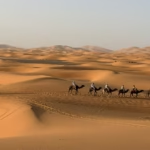
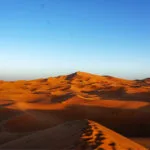
The Vibe: Lunar stillness and “glamping” luxury. Why Go: Many Morocco desert tours require a 9-hour drive to the Sahara. Agafay offers a stunning stone desert experience just 45 minutes from the city. It is the ideal spot for sunset dining or an overnight stay in a luxury tent. Insider Tip: Arrive 90 minutes before sunset. This “Golden Hour” turns the rocky dunes purple and pink. For families, this is a highlight of Morocco Family Tours, as it offers camel rides and quad biking without the grueling travel time of Merzouga.
Bacha Coffee at Dar El Bacha
The Vibe: 1910s colonial glamour and coffee ritual. Why Go: Housed in the palace of the Pasha of Marrakech, this coffee room is a time capsule of gold leaf and checkered floors. The menu features over 200 varieties of 100% Arabica. Insider Tip: No reservations are accepted, and lines can exceed two hours. Arrive at 10:00 AM when they open. If there is a wait, use their buzzer system to explore the attached Musée des Confluences (Museum of Confluences) while you queue—it’s a hidden gem of architecture in itself.
The Queue Management Strategy
Bacha Coffee has become a victim of its own excellence, with queues often stretching to two or three hours.
- The System: Upon arrival, you receive a buzzer. This allows you to explore the museum (Dar El Bacha) while you wait. The museum itself is a masterpiece of architecture, often less crowded than the Bahia Palace but equally beautiful.
- Insider Tip: Arrive exactly at opening (10:00 AM) to secure a table for “breakfast,” or treat the wait as part of the experience by fully exploring the museum’s exhibitions on Moroccan craftsmanship and American archaeological collections (the Patty Birch collection). The combination of high culture and high caffeine is unmatched.
| Aspect | Description |
| History | Built in 1910; Former palace of Thami El Glaoui (Pasha of Marrakech). |
| Coffee Selection | Over 200 varieties of 100% Arabica from 35 countries. |
| Famous Guests | Winston Churchill, Charlie Chaplin, Franklin Roosevelt. |
| Current Function | Museum (Musée des Confluences) & Luxury Coffee House. |
| Queue Strategy | Arrive at 10:00 AM. Use buzzer system to tour the museum during wait. |
Le Jardin Secret: A Lesson in Water
The Vibe: An open-air museum of hydraulic engineering. Why Go: Located in the Mouassine district, this restored palace showcases the ancient khettara irrigation system. It features two distinct gardens: an Exotic Garden and a traditional Islamic Garden designed as a metaphor for paradise. Insider Tip: Pay the extra fee to climb the tower (Menzeh). It is one of the few high points in the medina open to the public, offering a rare 360-degree view of the rooftops and the Atlas Mountains.
Bahia Palace: The Grand Vizier’s Harem
The Vibe: Labyrinthine opulence. Why Go: Built to be the greatest palace of its time, the Bahia is a sprawling complex of 150 rooms and lush interior gardens. The “Court of Honor” is a massive marble expanse that is breathtaking in its scale. Insider Tip: Visit during lunch hours (12:00 PM – 2:00 PM) when large Morocco Small Group Tours tend to be eating. The emptiness of the palace at this time highlights the intricate painted ceilings (zouak) and stained glass.
Maison de la Photographie
The Vibe: Visual time travel. Why Go: This private archive houses vintage Moroccan photography from 1870 to 1950. It provides essential context to the culture you are seeing on the streets, documenting a way of life that has remained remarkably consistent. Insider Tip: The rooftop terrace here is one of the highest in the medina and serves an excellent, simple lunch. It’s often quieter than the famous “Nomad” or “Cafe des Epices” and offers better views of the Atlas Mountains.
Sunrise Marrakech Hot Air Balloon
The Vibe: Floating over the “Red City” at dawn. Why Go: Seeing the contrast between the lush Haouz plain and the arid Jbilet mountains from the sky is unforgettable. It puts the geography of Marrakech into perspective. Insider Tip: Book with established operators like Ciel d’Afrique for safety and reliability. Most packages include a traditional Berber breakfast in a tent after landing—a perfect way to start the day before the heat sets in.
Day Trip to the Ourika Valley
The Vibe: Cool mountain air and riverside dining. Why Go: When the city heat hits 40°C, the locals flee to the Atlas Mountains. A day trip here involves hiking to the Setti Fatma waterfalls and eating tagine with your feet dipped in the cool river water. Insider Tip: If you are booking a morocco tour package, ensure this day trip is included. Avoid the weekends if possible, as it is a popular spot for locals. Wear sturdy shoes—the hike to the upper waterfalls involves some scrambling!
Into the Berber Heartland
While Marrakech is an imperial city, the culture of the surrounding mountains is distinctly Amazigh (Berber). A day trip to the Ourika Valley, located about 45 minutes to an hour from the city, serves as an essential escape from the summer heat and a dive into rural life.
Setti Fatma and the Seven Waterfalls
The road to Ourika winds along the river, shaded by walnut and cherry trees. The village of Setti Fatma is the terminus of the road and the starting point for hiking.
- The Hike: Visitors can hike to a series of seven waterfalls. The first is accessible to most, while the upper falls require a bit of scrambling and sturdy shoes. The air here is crisp and cool, a stark relief from the dusty heat of the medina.
- Riverside Dining: One of the quintessential Ourika experiences is eating lunch literally in the river. Local restaurants set up plastic tables and chairs in the shallow waters of the Ourika River. Travelers sit with their feet in the cool water, eating chicken tagine with lemon and olives while the river rushes by. It is unpretentious, joyful, and uniquely Moroccan.
Argan Cooperatives
The route to Ourika is lined with women’s cooperatives producing Argan oil. While some are tourist traps, legitimate cooperatives provide insight into the labor-intensive process of cracking the Argan nut to produce the “liquid gold” used for cooking and cosmetics. Supporting these cooperatives is a way to contribute to the economic independence of rural women.
The Art of Slow Travel in Marrakech
Marrakech rewards the patient. It rewards the traveler who is willing to wake up at dawn for a balloon ride, wait in line for the perfect cup of coffee at Dar El Bacha, or sit in silence in the courtyard of the Ben Youssef Madrasa.
The Marrakech souks are the city’s adrenaline, but the ten experiences outlined above are its oxygen. They represent the depth of a civilization that has mastered the art of living well—through architecture that cools the soul, gardens that tame the desert, and rituals that cleanse the body. By stepping beyond the medina’s shopping streets, you engage with the history of the Saadians, the vision of Majorelle, and the enduring hospitality of the Moroccan people.
Whether you are watching the sunset over the stone dunes of Agafay or tracing the geometric infinity of a zellij tile, you are witnessing the true magic of Marrakech. It is a city that does not just demand your attention; it invites your contemplation.
Practical Essentials for the “Quiet” Traveler
| Category | Tip/Recommendation |
| Best Time to Visit | Spring (March-May) and Autumn (September-November) offer the best weather for rooftop dining and desert excursions. |
| Currency | Moroccan Dirham (MAD). Cash is king for small entry fees and tips, though places like Bacha Coffee and Majorelle accept cards. |
| Dress Code | While modern, Marrakech is conservative. For women, covering shoulders and knees is respectful and reduces unwanted attention, especially in the medina. |
| Getting Around | The Medina is walkable but confusing. Download offline maps. For trips to Majorelle or Agafay, use “Petit Taxis” (ensure the meter is on) or pre-arranged private drivers. |
| Language | Darija (Moroccan Arabic) and French are the primary languages. English is widely spoken in tourist areas, but a polite “Bonjour” or “Salam Alaykum” goes a long way. |
| Friday Note | Friday is the holy day. Some shops in the souks and certain attractions may open late or close for midday prayers. Museums like Majorelle usually remain open. |
Summary of Key Locations & Booking Tips
- Jardin Majorelle: Book online in advance. Walk-ins are often turned away or face long lines.
- Ben Youssef Madrasa: Tickets available at the door. Early morning is best for photography.
- Bacha Coffee: No reservations. Arrive at 10:00 AM or be prepared to wait (explore the museum with the buzzer).
- Hammam: Book luxury hammams (Royal Mansour) weeks in advance. Local hammams (Mouassine) can often take walk-ins or same-day bookings.
- Agafay Camps: For dinner, booking 2-3 days in advance is recommended. For overnight stays, book weeks in advance during peak season.
Planning Your Trip?
Marrakech is a city that rewards the curious. While these sights are incredible on their own, connecting them into a seamless journey is an art.
At Morocco Stunning Tours, we specialize in crafting the perfect Morocco Imperial Cities itinerary. We can arrange skip-the-line access, expert guides to explain the history of the Ben Youssef and Bahia, and private transport to whisk you between sights in comfort.
Contact us today to start planning your custom tour of the Red City.